
How Cold Is Mount Everest? Summit & Base Camp Temperature Guide
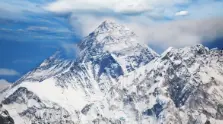
Mount Everest is the highest mountain in the world, and many people wonder how cold it really is at its peak. The summit rises to 8,848 meters (29,029 feet) above sea level, where temperatures stay far below freezing most of the year. As altitude increases, air becomes thinner and holds less heat, causing temperatures to drop sharply. This makes the Everest summit temperature extremely severe compared to the lower Himalayan regions.
Temperature at the Summit of Mount Everest
At 8,848 meters, the summit of Mount Everest is one of the coldest points on Earth. During the day, average temperatures are around -36°C (-33°F), while nights can plummet to -60°C (-76°F). Wind chill can make it feel as cold as -80°C (-112°F). Low oxygen levels (just 33% of sea level) reduce your body’s ability to stay warm. Only experienced climbers attempt the summit with oxygen support, thermal gear, and proper preparation.
Temperature at Everest Base Camp
For trekkers visiting Everest Base Camp trek, temperatures are milder but still cold. Spring daytime temps range from -5°C to 12°C (23°F to 54°F), nights -10°C to -15°C (14°F to 5°F). Autumn conditions are similar, with clear skies ideal for trekking. Summer monsoon brings rain and clouds, temps remain around -3°C (27°F). Trekkers should be ready for sudden drops and strong winds.
Seasonal Temperature Table
| Season | Day Temp (°C) | Night Temp (°C) | Conditions |
|---|---|---|---|
| Spring (Mar-May) | -5 to 12 | -10 to -15 | Best trekking time |
| Autumn (Sep-Nov) | -7 to 10 | -12 to -20 | Clear skies, popular |
| Winter (Dec-Feb) | -15 to -20 | -25 to -30 | Extremely cold, few trekkers |
| Monsoon (Jun-Aug) | 0 to 8 | -5 to -10 | Wet, slippery, not ideal |
Why Is Mount Everest So Cold?
- High Altitude Means Less Heat: Thinner air cannot retain heat.
- Jet Stream Winds: Strong winds strip away warmth, intensifying the cold.
- Climate Change and Glacial Melting: Unpredictable weather and avalanches create additional challenges.
Everest Weather by Season
- Spring (April-May): Best for trekking & climbing, clear skies, lower wind speeds.
- Autumn (Sept-Oct): Cool, dry weather, ideal for photography and trekking.
- Winter (Dec-Feb): Harshest, summit temps -60°C (-76°F). Only very experienced climbers attempt.
- Monsoon (Jun-Aug): Trails muddy & slippery, cloud cover reduces visibility, dangerous for climbers.
Best Time to Climb Mount Everest
The optimal window is mid-May when the jet stream shifts, creating a few calm days. Most successful summits occur in this period. Climbers need gear, oxygen, and expert guidance.
How to Survive the Cold on Everest
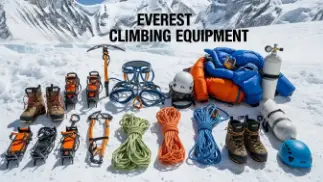
Must-Have Gear
- Down suits or jackets rated -40°C or lower
- Windproof gloves & insulated socks
- Oxygen masks for high altitudes
- Four-season sleeping bags
- Thermal base layers & face protection
Acclimatize Properly
Spend extra days at Namche Bazaar (3,440m) or hike Kala Patthar (5,643m) to adjust to thin air and extreme cold.
Protect Yourself from Frostbite & Hypothermia
Layer clothing, stay dry, limit skin exposure, recognize early signs and act quickly.
Conclusion
Mount Everest is as cold as it is tall. From -5°C at base camp to -60°C at the summit, it challenges even the most experienced climbers. Understanding temperatures, seasonal changes, wind chill, and survival techniques is crucial for anyone planning a trek or climb.
FAQs About Mount Everest Temperature
Coldest temperature recorded?
-60°C (-76°F) near summit, feels like -80°C (-112°F) with wind chill.
Is Everest cold year-round?
Yes. Base camp temps ~ -3°C in summer, summit below -20°C.
Why colder than other peaks?
Height, thin air, strong jet streams, limited heat retention.
Best time to trek Base Camp?
Spring (Apr-May) & Autumn (Sep-Oct).
How to survive extreme cold?
Proper gear, acclimatization, layering, oxygen, protect exposed skin.